
A view of the event captured.
Problem
How tangible making (through physical models) could serve as a bridge for AI literacy than text-based prompting alone?
What are the ways in which we invite the community, in its grassroots eco system to introductory, engaging encounters with AI to get back the sense of power to the community over this development.
Design

(A flow flow for the workshop booths. Source:Pictorial for ACM TEI 26)
Motivation: “Thinking Through Making”
Working with our community partners, a local makerspace and a non-profit that does community based AI literacy workshops, we rejected the traditional focus group study format towards Participatory Making and Design Futuring centering the community
Collectively, we designed a 5-step user journey that moved participants from abstract ideation to concrete prototyping, and finally to AI augmentation. I lead the design of materials and designed research
Station 1: The Intro
Intro Questionnaire
We asked about their current feelings toward AI and their “blue sky” hopes for the city.
This provided Pre-workshop Baselines
Station 2: Making
Here, participants used materials (clay, wood, resin) to design and build a character or object for the “Future City of Atlanta” through sitting around tables set-up together.
Station 3: AI Station
Facilitators helped participants photograph their physical models.
We then used RunwayML to “animate” these static objects based on the children’s verbal prompts.
We observed how children negotiated with the AI through some questions:
Did they accept the AI’s interpretation?
Did they get frustrated when the AI ignored the physical constraints of their clay model?.
Station 4: Interviews
To capture qualitative feedback in a chaotic festival environment, We designed a “Red Carpet” interview station. This framed the interview as a VIP experience and center back to them as creators to be celebrated. I was the red carpet interviewer.
We recorded 3 hours of video interviews with 43 participants, focusing on their emotional reaction to the AI’s output.
We also collected exit survey questionnaires as an option everyone, due to the fact that not everyone would be willing to be interviewed.
Station 5: The Diorama
Finally, participants placed their physical artifacts onto a collective map of the city.
This served as a real-time collective artifact.
Children self-organized their creations into clusters (e.g., placing trees near housing, or robots near roads).
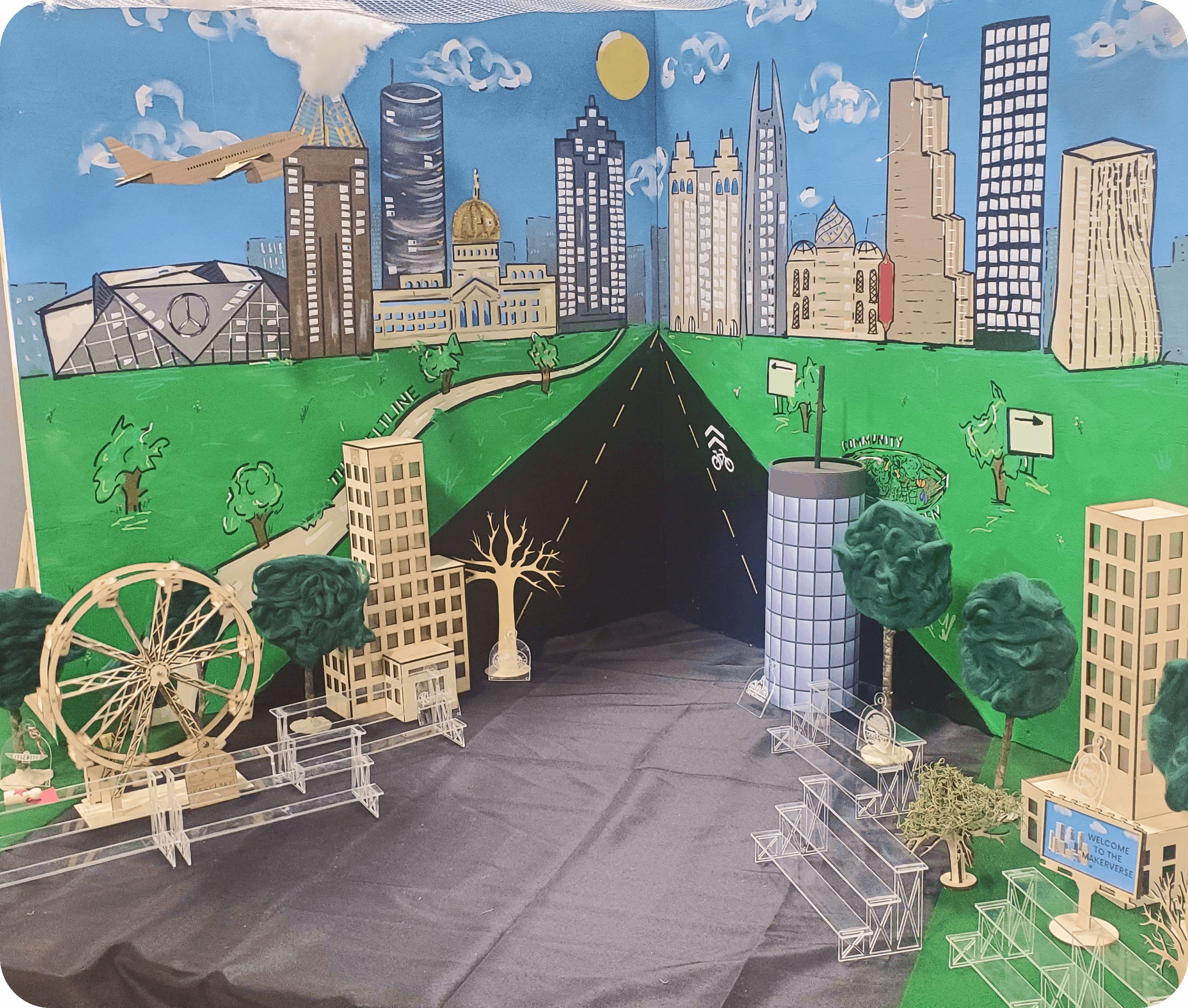
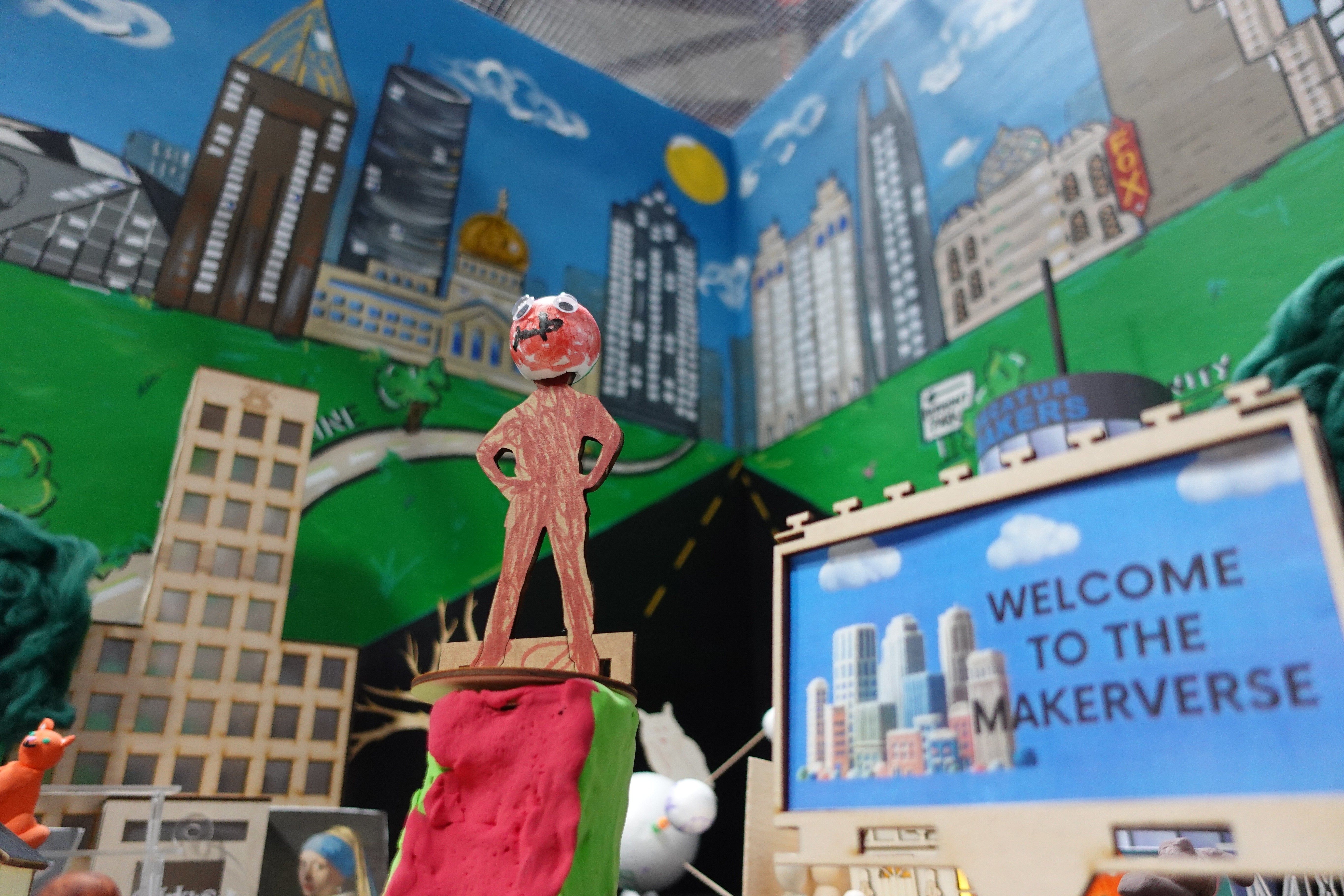
The intitial physical diorama built by makerspace which became a collective as people finished their hand made model.
Frames for the Ai generated video from Runway for one of the clay model, show a can land and grab an object
Analysis & Insights

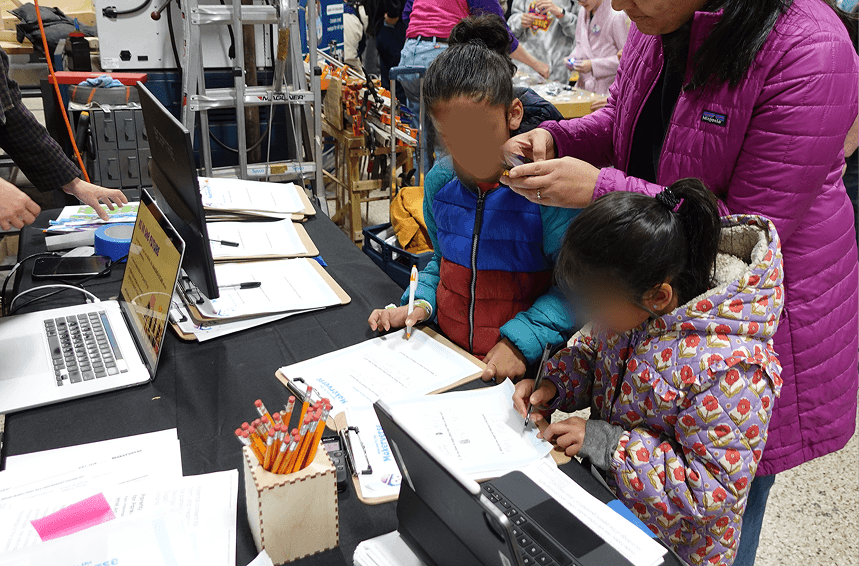
Left: Participants showing their models after their interview at the red carpet. Right: Participants filling the intro questionnaire.
We utilized Reflexive Thematic Analysis to code the interview transcripts and survey data (N= 118 questionnaires, 43 interviews). We looked beyond surface-level keywords to identify semantic patterns in how users described their agency.
Insight 1: Craft as Meaning Making
Users were far more forgiving of AI "hallucinations" (glitches) when the output was based on their own physical creation.
For istance, pne participant noted, "AI changes the plan slightly but it's good" (EQ37).
Another was delighted when the AI made their clay cat "stride" unexpectedly.
Insight 2: Beyond Technocentric Futures
Despite being in a high-tech "Maker" environment, the community overwhelmingly rejected "Cyberpunk" or technocentric futures.
60% of the artifacts created were nature-based (flowers, animals, trees). Participants explicitly stated desires for "more flowers and more parks" (P16) rather than flying cars or robots.
Insight 3: Imperfect AI
While users enjoyed the "surprise" of AI, they became frustrated when the AI overrode their core intent.
"I learned that AI isn't always going to work on the 1st try" (EQ43). Users viewed the AI as a "collaborator" that needed strict supervision.
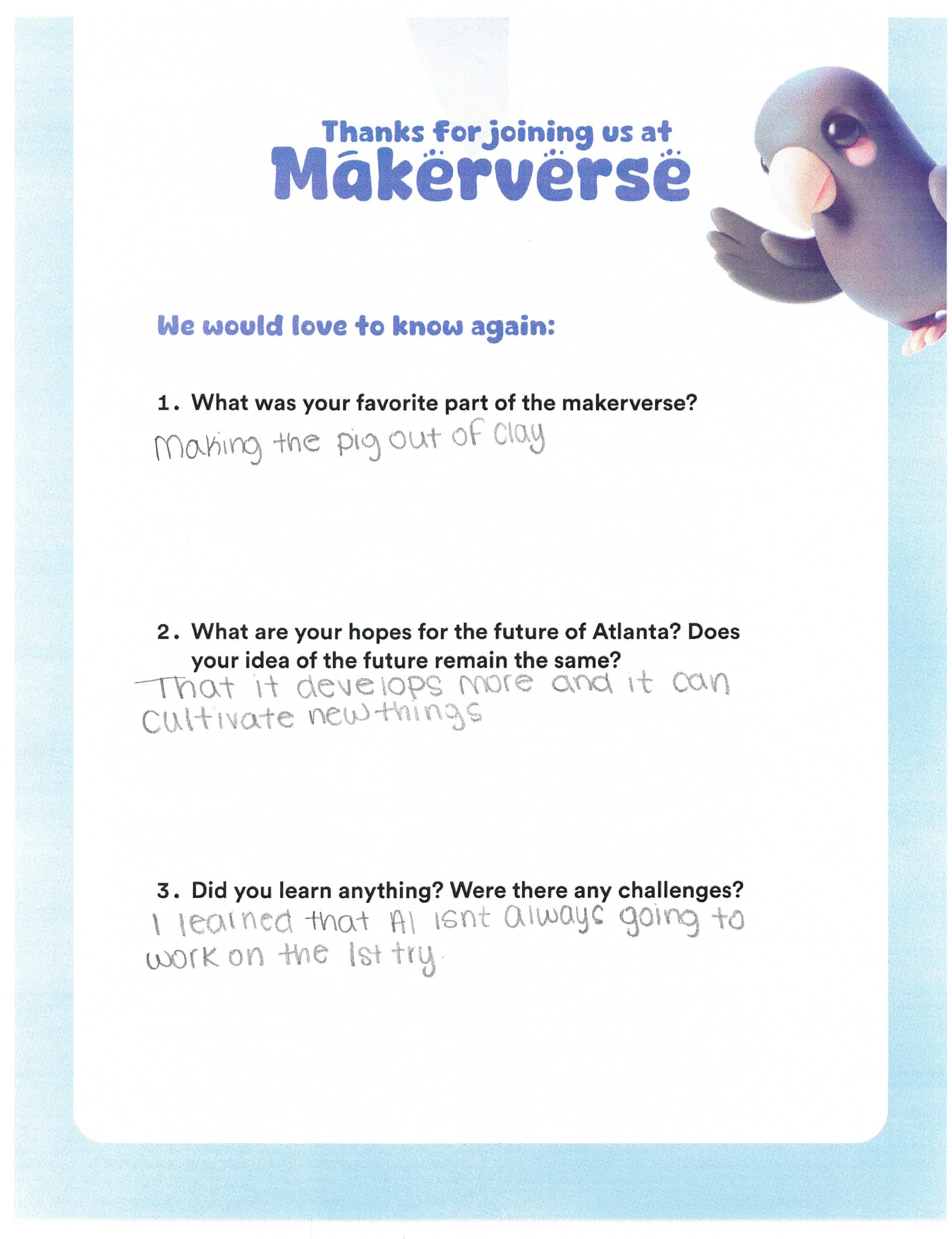
A handwritten response from participant from exit questionnaire.
What We Learnt

The final diorama made into a Virtual version and emailed to participants
Reflections: AI Literacy in the Grassroots
Into The Makerverse highlights to role of tangible engagement, expression and design futuring and role of the third community space (makerspaces) in serving for AI literacy initiatives as well as, in the process, facilitate conversations on cities infrastructure.
Funding
Seed Grant by Atlanta Interdiscplinary AI Network 2026, PI: Lorraine Kowalski
Institue of Data Engineering & Science (IDEaS) at Georgia Tech & Microsoft, PI: Noura Howell Co-PI: Michael Nitsche
Publication