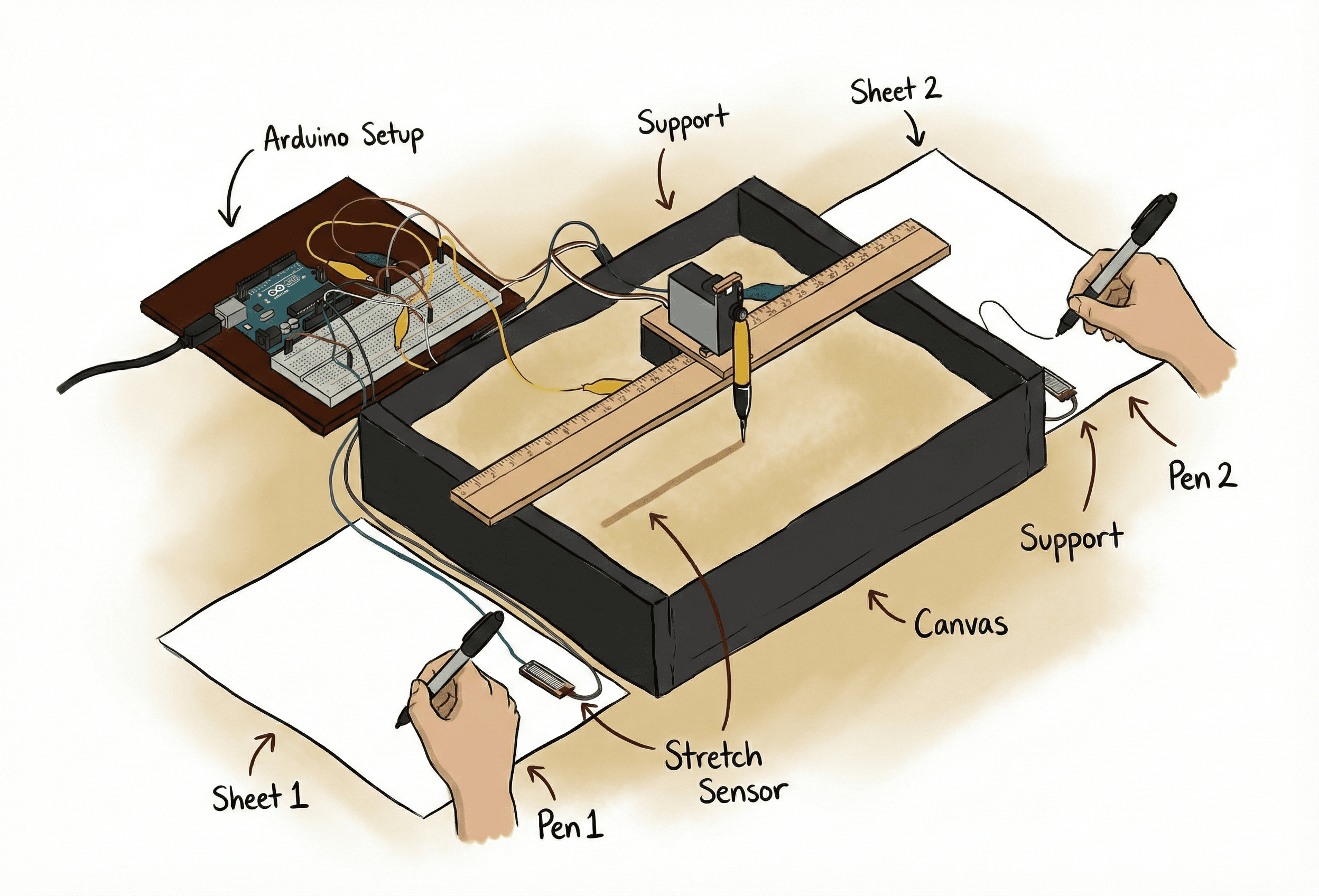
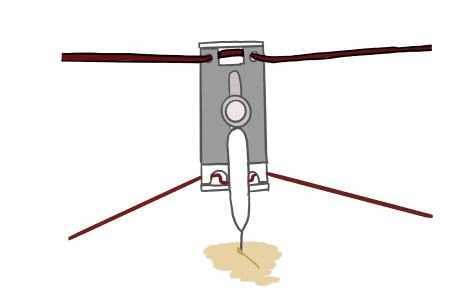
A schematic diagram of the Sandbook interface
Overview
The Sandbook is a design research project exploring the intersection of collaborative creativity and material agency. It manifests as a co-creative sand sketch interface—a digital-physical hybrid display designed to capture human-human collaborative drawing.
Unlike traditional collaborative tools that aim for frictionless efficiency, this project purposefully introduces the unstable, messy, and resistive properties of sand to surface the "tensions" inherent in cooperative work. The resultant "note" or sketch is not just an image, but a topographic representation of the engagement, negotiation, and struggle between two people and the material itself.
Research Motivation
Research Question
How can we leverage the material qualities of sand to explore tensions, negotiation, and shared agency in collaborative drawing?
Research Process
This project was a process of learning from three distinct sources: the material itself, theoretical practitioners, and the dynamics of the collaboration.
a. Materal Research
Sand is not a passive canvas but an active agent in the design process.
Moisture as a Variable: I observed how critical moisture content is to interaction. Dry sand flows and forgets; wet sand binds and remembers. The “binding agent” property of sand became a metaphor for how collaborators bind their ideas together.
Ephemeral Storage: I learnt that sand “imprints and stores the interaction in an ephemeral nature”. Unlike a digital file that is saved forever, a sand drawing is always at risk of erasure. This fragility forces users to be more present and deliberate in their actions.
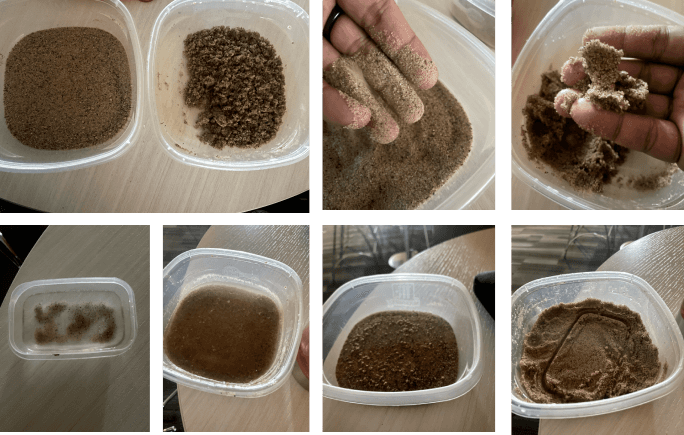
Material Research: Trying different forms and factor the material offers
b. Practitioner Observation
To understand how to design for this material, I conducted a practitioner observation of a sand artist pair from Bulgaria with over 50 years of combined experience. Due to logistical constraints, this observation was conducted remotely via video documentation of a workshop in 2016.
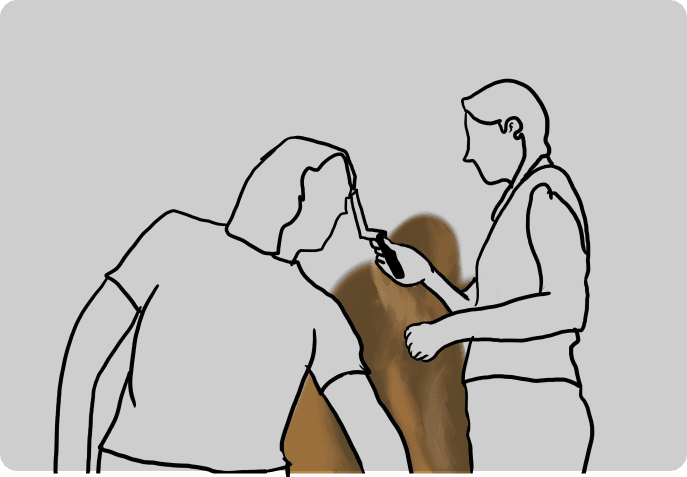
Paul and Remy, two sand artists from Bulgaria whose practice I observed.
Key Observations
I analyzed their workflow through three distinct material techniques:
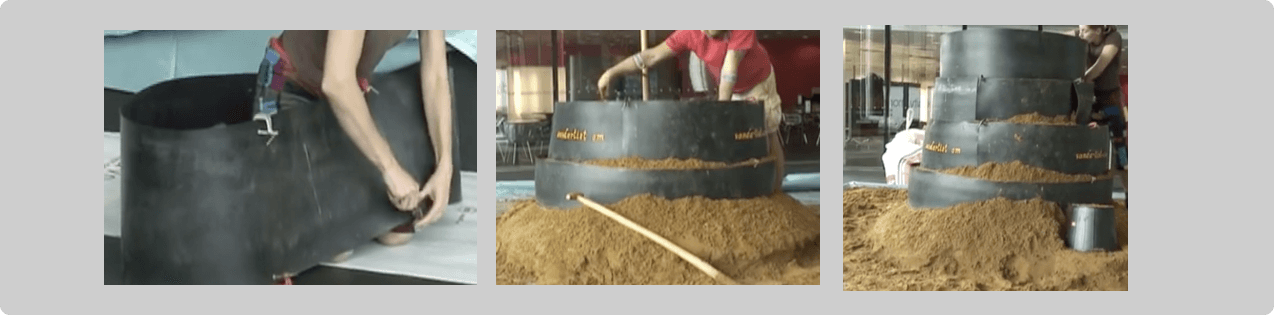
1.Additive Sculpturing: Building form by stacking sand blocks. This taught me that gravity dictates form—the material has agency that the artist must respect.
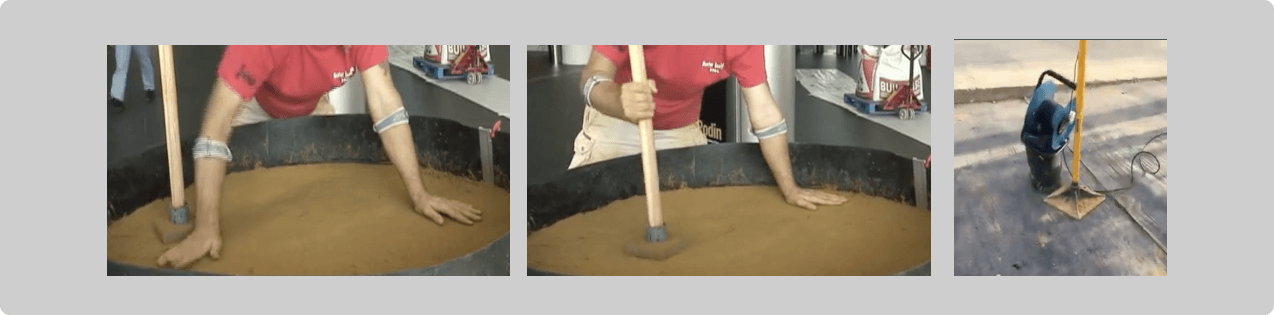
Compacting: A layer-by-layer toughening process. This revealed that structure requires invisible labor; the sand must be “bound” under pressure to hold a shape.
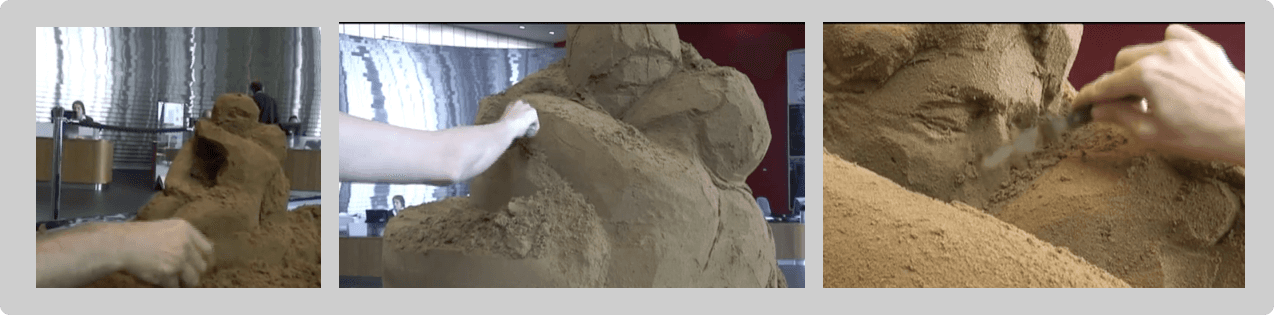
Reductive Sculpturing: Carving away material to reveal the form. This highlighted the irreversibility of the medium—unlike digital “undo,” sand remembers every mistake.
In the context of a massive sand sculpture, verbal communication is often inefficient. The work is physical, loud, and demanding. One partner knows when the other needs a tool, a bucket of water, or a shift in position. They “complemented each other,“ implying a fluid division of labor. While one compacted, the other might carve; while one assessed the form from a distance, the other executed the detail.
Design
The insights gathered from the material research, pracitioner observation research and related work were directly translated into the design of the Sandbook prototype.
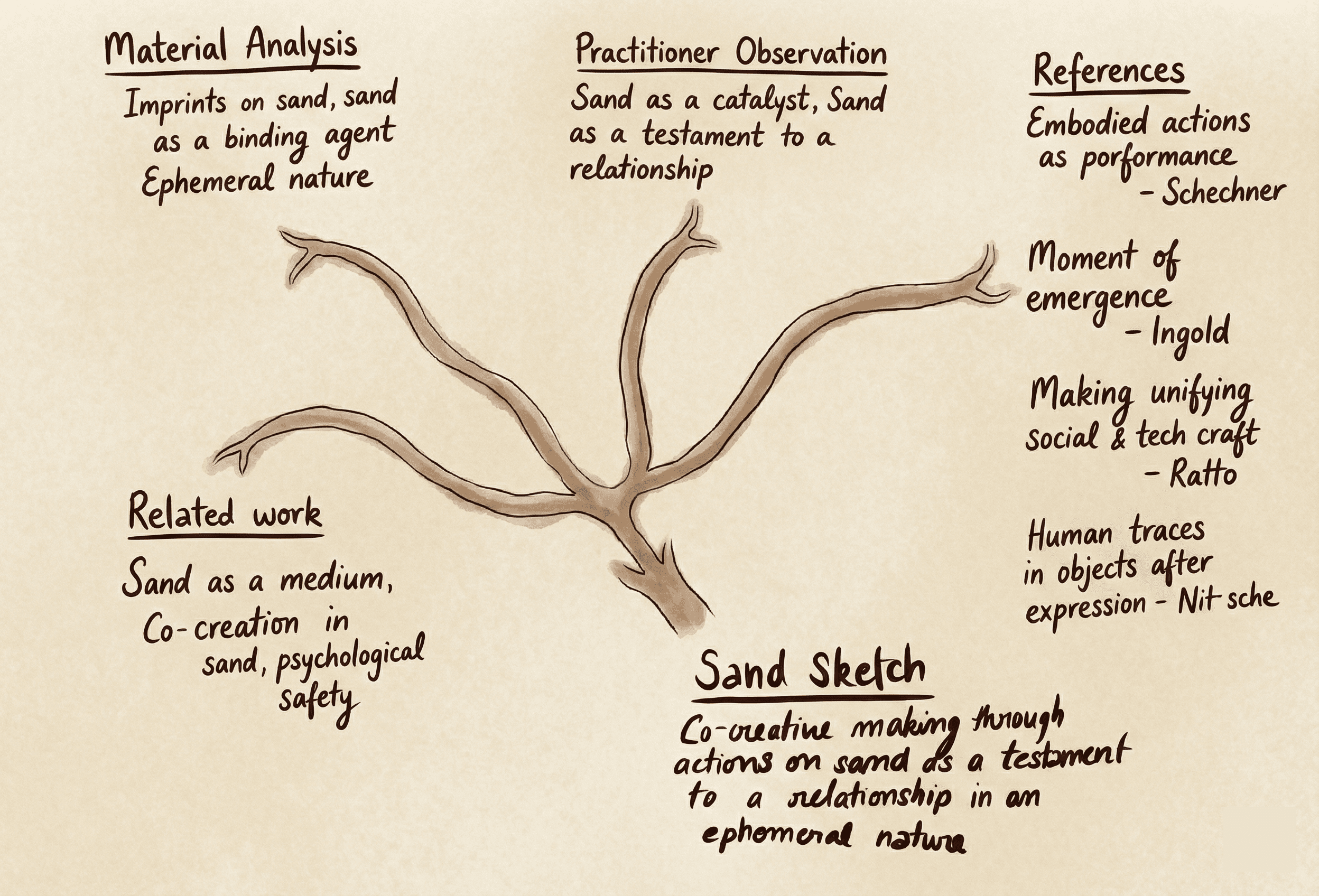
A synthesis of research and mapping it across a diagram.
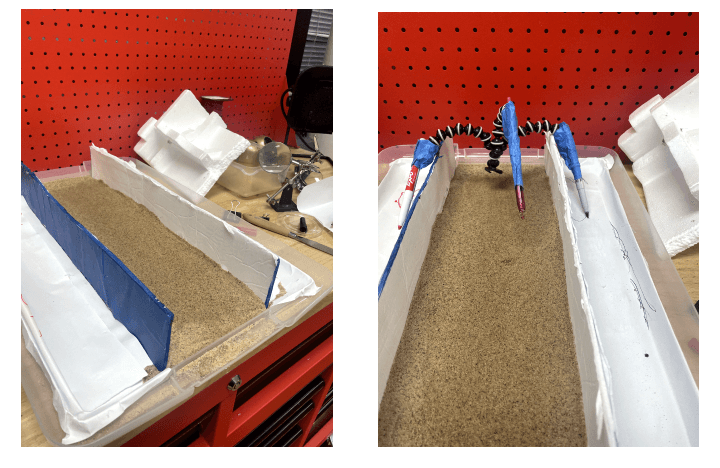
The first protoype to test if a co-creative interface could be made with two different inputs and a resultant output.
The system logic was derived directly from the “dance” metaphor:
Scenario A (Harmony): Both users move their pens at similar speeds and distances. The tension on the cord remains stable or changes uniformly. The Arduino interprets this as “Equal Contribution.” The servo motor glides smoothly, leaving a clean, uniform track in the sand.
Scenario B (Discord): One user pulls away, moves faster, or drags the other. The cord stretches unequally. The resistance spikes or drops erratically. The Arduino detects this “unequal contribution.” The servo motor is triggered to oscillate/vibrate rapidly.
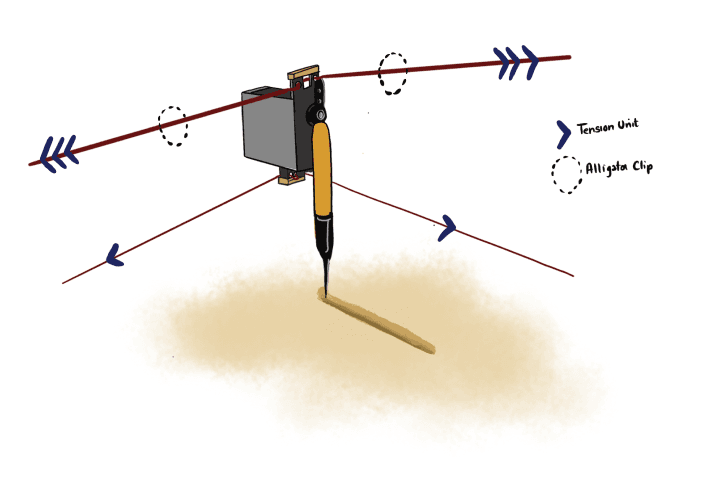
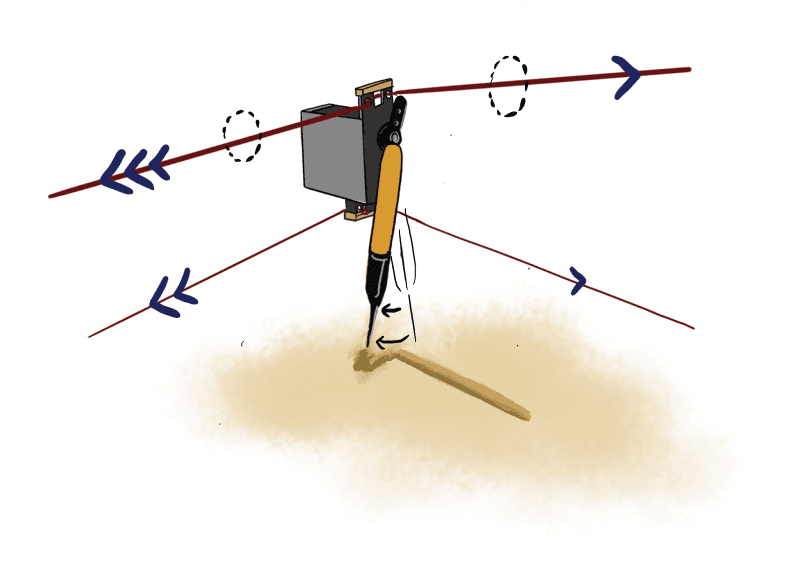
Left: a diagram of the scenario A: Right: a diagram of the scenario B
PROTOTYPE
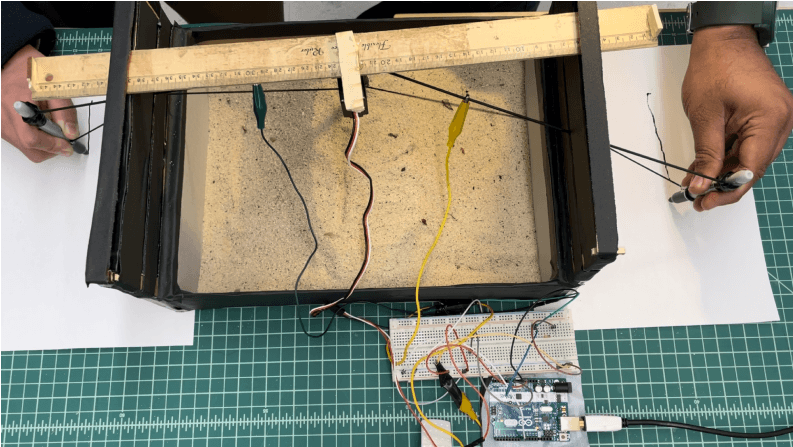
A prototype made for testing the interface
Discussions
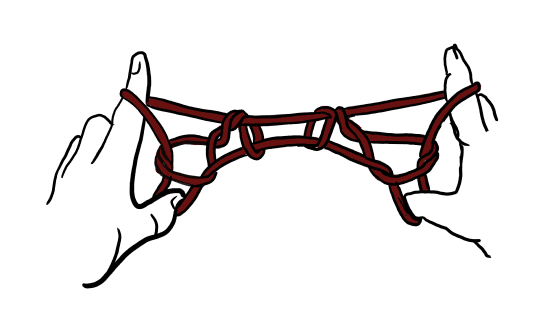
Ma’ii Ats’áá’ Yílwoí (Coyotes Running Opposite Ways). Photograph by Donna Haraway
The core of the sand sketch interface
Sandbook can be hold Donna Haraway’s “String Figures” as its a primary theoretical anchor. Haraway uses string figures (games like Cat’s Cradle) as a metaphor for “interconnectedness and entanglement.“
In these games, patterns are passed between hands; the string binds the players together in a complex, shifting topology